
How to Use the Ladle Shroud: A Complete Technical Guide for Continuous Casting Operations
1. Introduction
While the design and material composition of ladle shrouds—typically alumina-carbon, alumina-zirconia-carbon, or zirconia-based—are vital to performance, the correct usage, handling, installation, and operational coordination also determine service life and casting quality outcomes. Improper usage of the ladle shroud may result in reoxidation inclusions, clogging, steel level fluctuations, or even catastrophic failures.
This article offers a comprehensive and systematic guide on how to use the ladle shroud effectively in the continuous casting process. It includes pre-operation preparation, installation, sealing methods, alignment, casting operation considerations, maintenance, safety precautions, and common troubleshooting.
2. Understanding the Function of the Ladle Shroud
Before learning to use the ladle shroud, it is essential to understand its operational purpose.
The ladle shroud functions to:
3. Preparations Before Using the Ladle Shroud
3.1 Inspection and Quality Verification
Before installation:
3.2 Preheating and Conditioning
Depending on refractory material and steel plant practice:
3.3 Preparation of Ancillary Components
Before installation, ensure readiness of:
4. Installation of the Ladle Shroud
4.1 Correct Mounting Procedure
The shroud is typically mounted under the ladle nozzle, requiring:
The sealing method is crucial to avoid oxygen ingress:
4.3 Alignment
Play Video
Play Video
Proper alignment ensures:
4.4 Safety Locking
Safety devices are used to prevent:
5. Immersion and Connection with the Tundish
5.1 Immersion Technique
Correct immersion technique minimizes:
Play Video
The ladle shroud tip should remain submerged:
Incorrect depth results in:
6.1 Controlling Flow Rate and Start-Up
At casting start:
Play Video
Laminar flow is critical for:
Key factors:
The ladle shroud interacts with:
7. Maintenance and Inspection During Casting
Operators must monitor:
When casting ends:
9.1 Oxygen Aspiration
Cause:
Cause:
Causes:
Cause:
Working with the ladle shroud involves molten steel and high temperature. Safety requirements include:
11. Factors Influencing Shroud Performance
Performance depends on:
For optimal use:
The ladle shroud is a critical part of the continuous casting system, and proper usage is essential for stable steel flow, reduced reoxidation, minimized slag entrainment, and enhanced steel cleanliness. While material design and manufacturing quality determine baseline performance, the correct application—installation, sealing, immersion, monitoring, and removal—controls real-world results.
Effective use of the ladle shroud directly impacts casting quality, production efficiency, and operational costs. Therefore, steel plants must invest not only in high-quality ladle shrouds but also in operator training, maintenance protocols, and systematic process control.
Mastering ladle shroud usage is a fundamental step toward achieving clean steel production and competitive continuous casting operations.
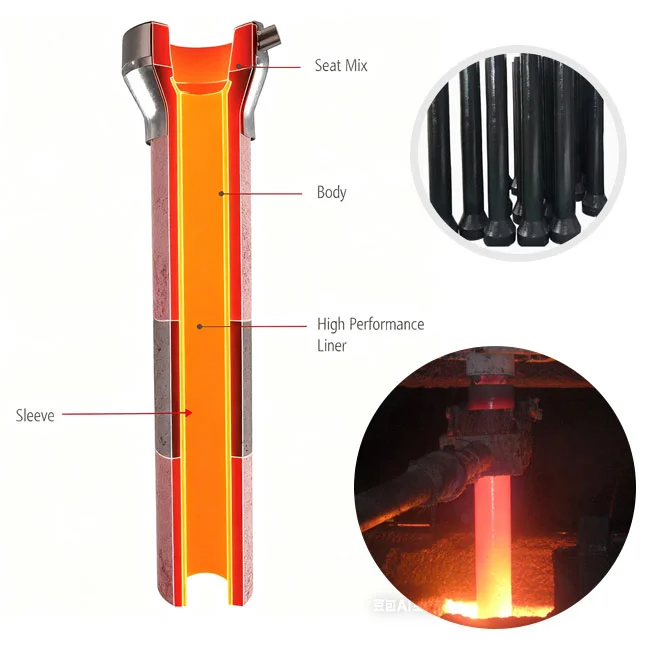
While the design and material composition of ladle shrouds—typically alumina-carbon, alumina-zirconia-carbon, or zirconia-based—are vital to performance, the correct usage, handling, installation, and operational coordination also determine service life and casting quality outcomes. Improper usage of the ladle shroud may result in reoxidation inclusions, clogging, steel level fluctuations, or even catastrophic failures.
This article offers a comprehensive and systematic guide on how to use the ladle shroud effectively in the continuous casting process. It includes pre-operation preparation, installation, sealing methods, alignment, casting operation considerations, maintenance, safety precautions, and common troubleshooting.
2. Understanding the Function of the Ladle Shroud
Before learning to use the ladle shroud, it is essential to understand its operational purpose.
The ladle shroud functions to:
- shield molten steel from atmospheric oxygen during transfer
- prevent nitrogen pickup and steel reoxidation
- minimize turbulence and splashing
- maintain laminar flow conditions
- connect ladle nozzle and tundish safely
- protect molten steel purity and reduce inclusions
- reduce thermal losses and steel temperature drop
- prevent slag entrapment
3. Preparations Before Using the Ladle Shroud
3.1 Inspection and Quality Verification
Before installation:
- verify shroud integrity (no cracks, chips, or internal defects)
- confirm dimensional tolerances
- inspect seating surfaces
- check for contamination
- verify anti-oxidation or coating layers
3.2 Preheating and Conditioning
Depending on refractory material and steel plant practice:
- some shrouds require controlled pre-heating
- others are designed for cold installation
- thermal shock
- cracking
- spalling
3.3 Preparation of Ancillary Components
Before installation, ensure readiness of:
- connection flange
- shroud holder
- sealing gasket or refractory paste
- safety locking pins
- alignment fixtures
4. Installation of the Ladle Shroud
4.1 Correct Mounting Procedure
The shroud is typically mounted under the ladle nozzle, requiring:
- lifting tools (mechanical clamps, cranes)
- edge protection to avoid chipping
- secure alignment jigs
- clean and dust-free
- free of slag or refractory debris
- level and flush
The sealing method is crucial to avoid oxygen ingress:
- refractory gaskets (ceramic fiber, calcium silicate)
- refractory paste
- metallic clamps
- mechanical compression systems
4.3 Alignment
Play Video
Play Video
Proper alignment ensures:
- smooth nozzle flow
- reduced turbulence in tundish
- avoidance of collisions with tundish impact pad
- uniform casting stream
4.4 Safety Locking
Safety devices are used to prevent:
- accidental disconnection
- movement during casting
- mechanical vibrations
5. Immersion and Connection with the Tundish
5.1 Immersion Technique
Correct immersion technique minimizes:
- thermal shock
- slag entrapment
- splashing
- entering tundish through slag-free area
- avoiding impact pad collision
- controlled descending speed
Play Video
The ladle shroud tip should remain submerged:
- below the tundish slag-metal interface
- above the tundish bottom impact pad
Incorrect depth results in:
- reoxidation (if too shallow)
- excessive turbulence (if too deep)
- slag entrapment (surface touching slag)
6.1 Controlling Flow Rate and Start-Up
At casting start:
- open nozzle gradually
- allow the shroud to stabilize
- monitor stream behavior
Play Video
Laminar flow is critical for:
- reduced inclusion entrapment
- lower refractory erosion
- improved steel cleanliness
- misaligned shroud
- excessive casting speed
- poor immersion depth
Key factors:
- sealing integrity
- immersion depth
- steady stream
- minimal vibration
- oxide inclusions
- nozzle clogging
- steel quality loss
The ladle shroud interacts with:
- ladle slide gate plate
- tundish impact pad
- SEN (sub entry nozzle)
- tundish argon purging systems
7. Maintenance and Inspection During Casting
Operators must monitor:
- shroud position stability
- leakage
- slag entrainment
- nozzle clogging symptoms
- steel splash occurrence
- stream shape and continuity
- flow rate adjustment
- argon purging increase
- tundish level control
- stream protection checks
When casting ends:
- close ladle slide gate fully
- allow stream to stop
- lift shroud carefully using lifting clamps
- avoid rapid thermal shock during removal
- inspect the shroud for wear patterns
- evaluate erosion zones
- document operational data for troubleshooting
9.1 Oxygen Aspiration
Cause:
- poor sealing
- shallow immersion
- cracked shroud
- improved sealing gaskets
- immersion control
- pre-inspection
Cause:
- immersion too deep or misplaced
- slag layer disturbance
- adjust depth
- avoid slag touching
Causes:
- inclusion buildup
- reoxidation
- inadequate argon purging
- optimized steel composition
- consistent argon flow
Cause:
- thermal shock
- mechanical impact
- abrasive wear
- proper pre-heating
- careful handling
Working with the ladle shroud involves molten steel and high temperature. Safety requirements include:
- heat-resistant PPE
- slag splash shields
- fire protection systems
- remote manipulation equipment
- emergency disengagement mechanisms
11. Factors Influencing Shroud Performance
Performance depends on:
- refractory quality
- zirconia or spinel content
- carbon and antioxidant systems
- surface finish
- nozzle geometry
- gasket design
- tundish steel level
- casting speed
- isostatic pressing
- zirconia reinforcement
- optimized pore distribution
For optimal use:
- inspect before installation
- pre-heat when required
- apply proper sealing
- align accurately
- immerse steadily
- maintain correct depth
- monitor flow conditions
- coordinate with SEN and tundish
- ensure operator training
- cleaner steel
- longer sequence casting
- reduced inclusions
- stable flow
- improved tundish life
- lower refractory consumption
The ladle shroud is a critical part of the continuous casting system, and proper usage is essential for stable steel flow, reduced reoxidation, minimized slag entrainment, and enhanced steel cleanliness. While material design and manufacturing quality determine baseline performance, the correct application—installation, sealing, immersion, monitoring, and removal—controls real-world results.
Effective use of the ladle shroud directly impacts casting quality, production efficiency, and operational costs. Therefore, steel plants must invest not only in high-quality ladle shrouds but also in operator training, maintenance protocols, and systematic process control.
Mastering ladle shroud usage is a fundamental step toward achieving clean steel production and competitive continuous casting operations.